Here’s a question we get all the time: “Does table shape really matter that much?” The short answer? Absolutely. The long answer involves understanding how different shapes affect everything from conversation flow to how many people you can actually seat comfortably.
After helping Fort Wayne families choose dining tables for over 70 years, we’ve seen how the right shape can make a small dining room feel spacious and the wrong shape can make a large room feel awkward. Let’s walk through what actually works and why.
Rectangle: The Default Choice (For Good Reason)
Most people default to rectangular tables, and honestly? That’s not a bad instinct. They’re familiar, they work in most dining rooms, and they seat people efficiently without any surprises.
Why Rectangles Keep Winning
Rectangles work because most dining rooms are rectangles. Sounds obvious, but you’d be surprised how many people overlook this simple fact. Put a rectangular table in a rectangular room and everything just feels right.
They’re also practical for everyday life. Push one side against the wall when it’s just your family eating breakfast, pull it out when company comes over. The person sitting at the “head” can easily serve food or lead conversations. Pretty straightforward.
They’re also practical for everyday use. You can push one long side against the wall when it’s just the family, then pull it out for company. The ends provide natural spots for the hosts, and everyone along the sides can see each other reasonably well.
The Downside Nobody Mentions
Here’s the thing about long rectangular tables: the person sitting at one end can’t really have a conversation with someone sitting in the middle of the opposite side. You end up talking to the people next to you or across from you, but not to everyone at the table.
This might not matter if your family dinners are more about eating than talking. But if you’re the type who likes everyone involved in the same conversation, rectangles can work against you.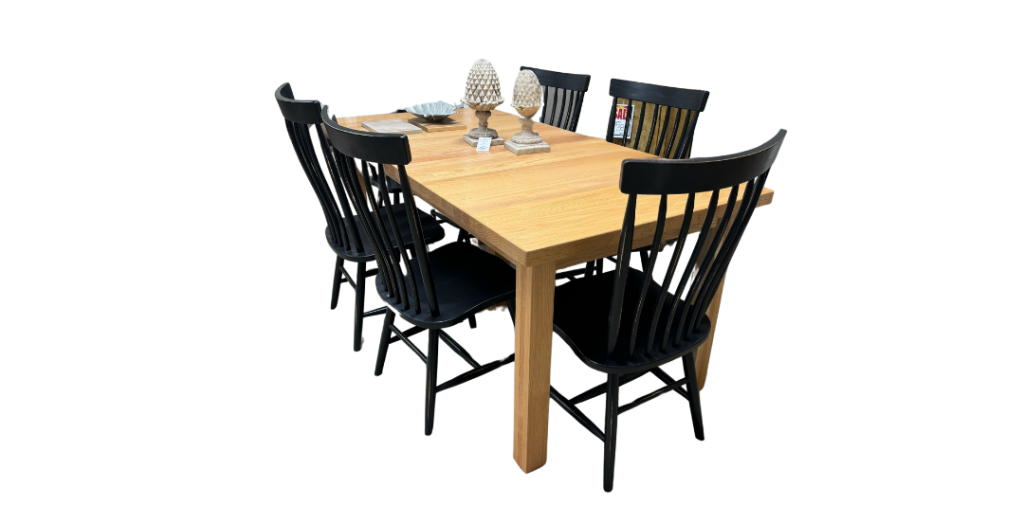
Round: The Conversation Maker
Round tables are the extroverts of the dining world. They naturally encourage conversation because everyone faces everyone else. No head of the table, no hierarchies—just people gathered in a circle.
Why Rounds Work So Well
Ever notice how people naturally gather in circles when they’re having intense conversations? Round tables tap into that same dynamic. Everyone can see everyone else’s face, nobody feels left out, and conversations flow more naturally around the entire table.
They’re also space-efficient in ways that might surprise you. A 48-inch round table seats six people more comfortably than a rectangular table with the same square footage footprint. Plus, no sharp corners means easier traffic flow around the table.
Round Table Challenges
The biggest challenge with round tables is fitting them into rectangular rooms without making the space feel unbalanced. They work best in square dining rooms or open-concept areas where the dining space isn’t strictly defined by four walls.
Another consideration: round tables over 54 inches in diameter start to feel disconnected. The person across from you gets pretty far away, and you lose some of that intimate conversation benefit that makes rounds so appealing in the first place.
Square: The Overlooked Option
Square tables don’t get much attention, which is too bad because they solve specific problems really well. They’re like round tables’ more structured cousin—intimate seating with clean, predictable lines.
When Squares Actually Make Sense
Squares work brilliantly when you regularly seat the same four to six people and want everyone to be able to talk to everyone else. Unlike rectangles, there’s no “far end” where someone gets isolated.
They’re particularly good in Fort Wayne’s older homes where the dining room is smaller but you still want it to feel intentional and formal. A well-proportioned square table fills the space without overwhelming it. Unlike rectangles, which can create distance between people, squares keep everyone close enough to pass dishes easily and maintain eye contact naturally.
The Square Problem
Here’s the catch with square tables: they’re not flexible at all. If your sister-in-law decides to bring her boyfriend to Thanksgiving, you’re stuck. There’s no graceful way to add extra seating to a square table.
They’re also fussy about room size. Too big a room and the square looks like it’s floating in space. Too small and it dominates everything else.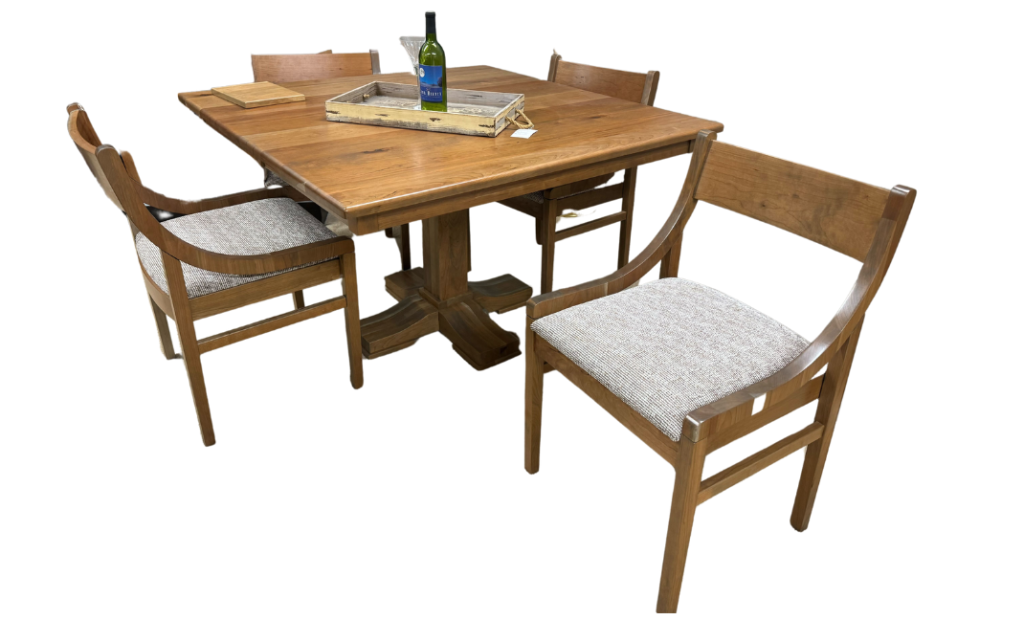
Oval: The Compromise That Works
Ovals are essentially rectangles with rounded ends, combining the space efficiency of rectangular tables with some of the conversation benefits of rounds. They’re particularly good solutions for families who can’t decide between the two main shapes.
What’s Good About Ovals
Those rounded ends fix the biggest problem with rectangular tables—nobody gets stuck in a conversation dead zone. Plus, ovals just look gentler in a room full of hard angles and straight lines.
Ovals also handle crowd flexibility better than squares or rounds. Your regular family of four can sit comfortably, but you can squeeze in a couple extra people for holidays without it feeling completely awkward.
Consider This About Ovals
Finding chairs that work well with ovals can be trickier than with other shapes. The curved sides mean that chairs need to be positioned carefully to maintain the visual flow. It’s not impossible, just something to think about during the selection process.
The Shape Decision: A Quick Reference
Sometimes it helps to see all your options side by side. Here’s how different table shapes work for different situations:
| Table Shape | Best For | Seats Comfortably | Room Shape | Conversation Style |
| Rectangle | Traditional dining rooms, formal entertaining, families who need flexibility | 6-12+ people | Rectangular rooms, separate dining rooms | Good for large groups, some dead zones |
| Round | Intimate conversations, smaller families, open concept spaces | 4-8 people | Square rooms, open areas, breakfast nooks | Everyone can see everyone, very social |
| Square | Small dining areas, couples, intimate family meals | 4-6 people | Square or compact rectangular rooms | Face-to-face conversations, cozy feel |
| Oval | Families who want round benefits with rectangle practicality | 6-10 people | Most room shapes, especially narrower spaces | Better than rectangle, not quite as social as round |
Note: Seating numbers assume comfortable spacing. You can always squeeze in more people for special occasions.
Fort Wayne Homes and Table Shapes
Where you live in Fort Wayne often influences which shapes work best:
Historic homes in areas like West Central or Williams typically have formal, rectangular dining rooms that work beautifully with traditional rectangular tables or elegant ovals.
Mid-century homes often feature square or nearly square dining areas that are perfect for round tables or squares, depending on your style preference.
Contemporary builds frequently have open-concept great rooms where rounds can help define the dining area within the larger space.
How We Help Families Decide
When people come to us torn between shapes, we start with practical questions:
How do you actually use your dining room? Daily family meals, weekend entertaining, or mostly special occasions?
Who typically sits at your table? Just adults, or kids who need help reaching dishes?
Do you tend to have big family discussions at dinner, or is your table more about eating and getting on with life?
What’s your room situation? Can people walk around the entire table, or is one side pushed against a wall or buffet?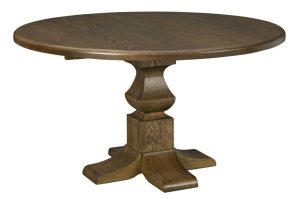
The Real-World Test
Here’s something we’ve learned: the “perfect” shape on paper might not be the perfect shape for your actual life. We’ve seen families choose round tables for better conversation, then realize they miss having a clear spot for serving dishes. Others pick rectangles for the practicality but find they feel too formal for casual family meals.
That’s why we encourage people to actually sit at different shaped tables in our showroom. See how it feels to reach across a round versus stretch down a rectangle. Notice whether the shape encourages the kind of interactions you want in your dining room.
Mixing Shapes (Yes, It Can Work)
Sometimes the answer isn’t choosing one perfect shape of dining table but mixing shapes thoughtfully. A rectangular main table with a round breakfast table in the kitchen. Maybe you have a square table for regular family dinners and a couple of TV trays that you can bring out when you’re hosting a party. The main thing is making sure whatever you choose doesn’t fight with your room or make daily life harder.
What Comes After You Pick a Shape
Once you know whether you want round, square, rectangle, or oval, the other decisions get easier. Round tables look great with curved-back chairs. Rectangles can handle pretty much any chair style. Squares work well with benches on one or two sides if you want to save space. Rectangles can handle more angular seating. Squares work well with benches on one or two sides.
The table base also needs to work with your chosen shape. Pedestal bases are classic with rounds but can work with squares too. Rectangles can handle everything from trestle bases to four legs, depending on your style.
Try Different Shapes Before You Decide
Look, you can read about table shapes all day, but until you actually sit at a round table and try to have a conversation across it, you don’t really know how it feels.
Our showroom has different shaped tables set up so you can test them out. See if you like being able to make eye contact with everyone at a round table, or if you prefer the more structured feel of sitting at a rectangle.
We’ll answer your questions about what works in your specific dining room, but we won’t pressure you to decide today. Take your time figuring out which shape feels right for how your family actually eats and talks together.
Your table shape affects every meal you eat at home for the next couple decades. Worth getting it right.